
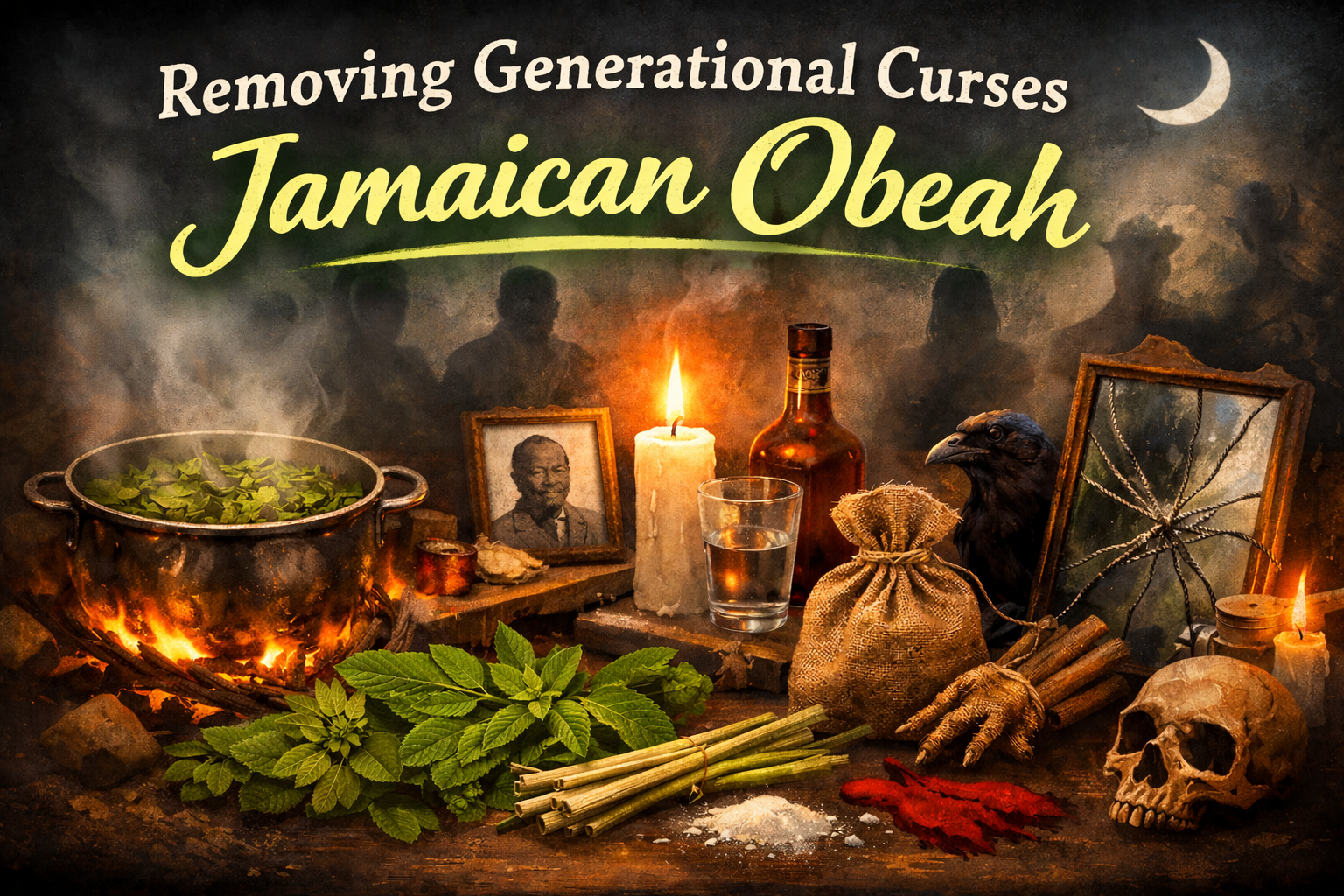
In Jamaica, the idea of a “generational curse” is closely tied to cultural beliefs surrounding Obeah. While the phrase may suggest a supernatural spell passed through a family line, it is often understood more broadly. Many people use it to describe patterns of hardship that seem to repeat across generations, such as poverty, illness, or troubled relationships.
Within this context, these patterns may be linked to spiritual imbalance, ancestral influence, or even intentional spiritual work believed to have been done against a family. At the same time, these repeated experiences can also arise from real-life conditions such as trauma, environment, and learned behaviors that are passed down over time.
Spiritual Imbalance and Ancestral Influence

In traditional Jamaican belief, life is not only physical but also spiritual. When there is a disruption in this balance, it can affect individuals and families in lasting ways. Some believe that unresolved issues connected to ancestors, including neglect of family traditions or past wrongdoing, can create a lingering effect that influences future generations.
Rather than viewing this as punishment, it is often seen as a sign that something is out of alignment and needs attention. The focus is not on fear, but on restoring harmony within both the individual and the family line.
Cleansing and Restoration Practices

The process of removing what is called a generational curse in Jamaican Obeah is centered on restoration rather than confrontation. Practices are aimed at cleansing negative influences and reestablishing balance.
One of the most well-known methods is the use of bush baths. These involve preparing herbal mixtures that are poured over the body, usually from head to toe. The act is symbolic, representing the washing away of negativity and the renewal of the individual. Prayer and spiritual reflection are often included, blending African-derived traditions with Christian influence, which is common in Jamaican culture.
Jamaican Herbs Used in Bush Baths
The herbs used in bush baths carry both physical and symbolic significance. Cerasee is widely known for its bitterness and is associated with deep cleansing, believed to purify both the body and the spirit. Guinea hen weed is recognized for its strong scent and is often used for protection, with many believing it can drive away negative energy.
Fever grass, also known as lemongrass, is valued for its calming properties and is used to ease the mind while encouraging positive energy. Leaf of life is associated with healing and recovery, making it a common choice in baths meant to restore strength. Jack in the bush is another traditional herb, typically included in stronger cleansing mixtures when dealing with what is believed to be more persistent or heavy spiritual conditions.
Signs People Believe Indicate Obeah Influence

There are several experiences that, within Jamaican culture, are often interpreted as signs that Obeah may be affecting someone. A sudden and unexplained series of misfortunes, especially when multiple areas of life are impacted at once, is one of the most commonly cited indicators. Disturbing or recurring dreams, particularly those involving fear or pursuit, are also frequently mentioned.
Some individuals report feeling a constant heaviness or fatigue without a clear cause, while others notice sudden changes in mood or personality. The appearance of unfamiliar objects near one’s home may also raise suspicion, as can intense and unexpected conflict within relationships or families.
Although these signs are widely recognized, they are based on belief and interpretation rather than definitive evidence.
Distinguishing Between Spiritual and Non-Spiritual Causes

Understanding the difference between spiritual and non-spiritual causes is essential. Many of the experiences associated with Obeah can be explained through everyday factors. Stress, anxiety, depression, and physical health issues can all produce symptoms such as fatigue, mood changes, and disturbed sleep. Financial hardship and social pressures can also create cycles that feel difficult to break.
Because of this, it is important to first consider practical explanations. Addressing health concerns, improving living conditions, and working through emotional challenges can often resolve issues that might otherwise be seen as spiritual.
At the same time, for those who believe in spiritual practices, cleansing rituals and prayer can provide a sense of comfort and support. Taking a balanced approach allows individuals to respect cultural beliefs while remaining grounded in reality.
Conclusion: Restoration Over Fear
Removing a generational curse in Obeah is ultimately about restoring balance rather than reacting in fear. It involves cleansing what feels negative, reconnecting with a sense of stability, and making conscious changes that break cycles of hardship.
Whether understood as spiritual, psychological, or a combination of both, the process reflects a deeper truth: patterns can be changed. What has been passed down does not have to define the future, and healing—both personal and generational—is always possible.
